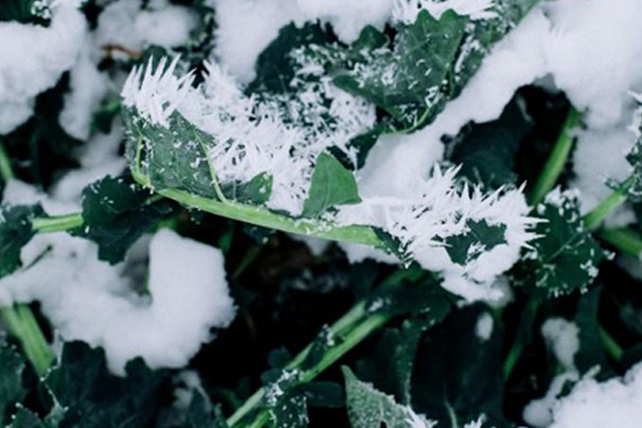
How do frosts affect grains and ripaks?
In the first days of December, several centimeters of snow fell on fields in most regions of the country. Average minimum temperatures on the ground (5 cm high) ranged from about -2°C to even -15°C. However, the soil temperature at a depth of 5 cm ranged from 0°C to -2°C on average across the country.
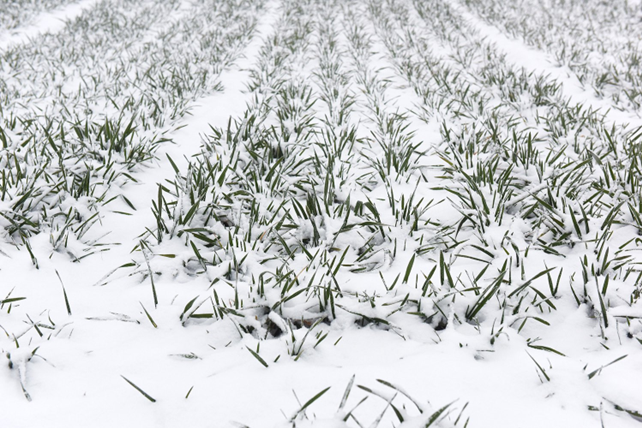
Of all the winter grains, barley is the most sensitive, as it can withstand temperatures down to -15°C without a layer of snow, and down to about -20°C with snow cover. The most resistant to low temperatures is rye, which can withstand temperatures down to -30-35°C even with little snow cover. Winter wheat can withstand frosts down to -25°C with little snow cover. Well-nourished and hardened rapeseed under snow can withstand frosts down to -25°C. But now it all depends on the condition of the plants, the degree of their hardening, nutrition with macro- and, above all, microelements that increase plant resistance to frost and unfavorable wintering conditions (for cereals, especially important are: Mn, Cu, Zn, and for rapeseed: B, Mn and Mo), as well as the frost resistance of the variety. The thickness of the snow cover and the duration of the frost period are also important.