
Liming is the way to restore soil fertility
After harvesting early cereals, it is time to consider liming. If the soil in your fields is too low in pH and it has been several years since the last liming, you should consider such an operation. Our soils are gradually acidifying, so they need to be limed from time to time to raise the pH of the soil. Why is this important?
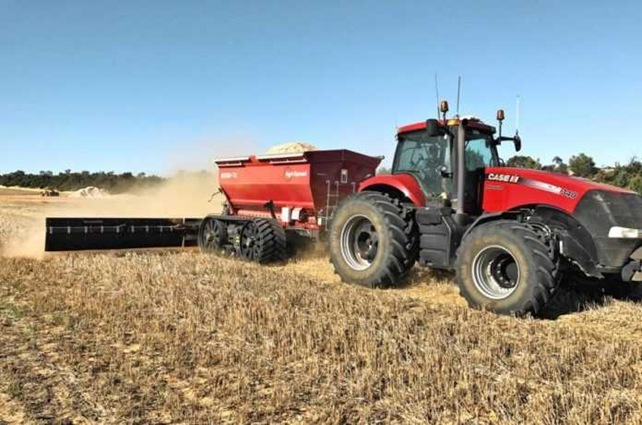
Lime fertilization improves soil structure, stimulates the development of bioorganisms and provides better root system formation. An important argument is that on soils with pH above 6.5, the absorption of macronutrients of fertilizers applied to the soil is the best and, accordingly, the efficiency of mineral fertilizers is maximum.
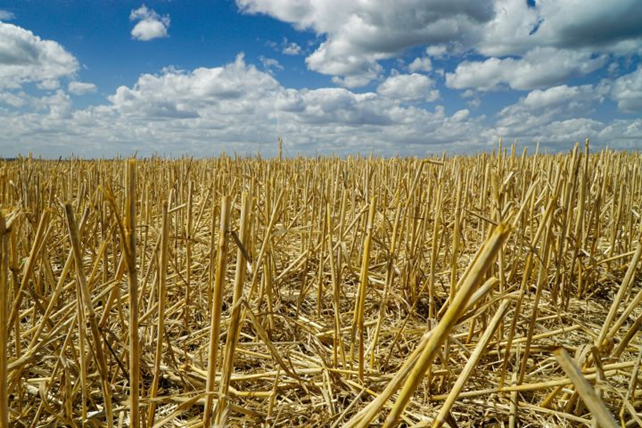
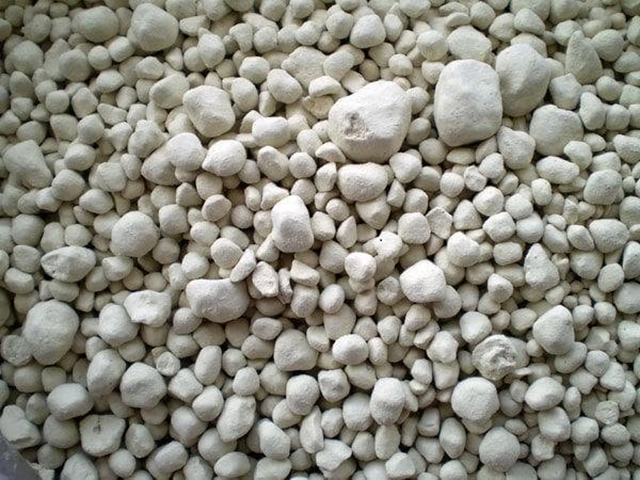
It is best to apply lime through the stubble and then incorporate it into the soil. There is no fundamental difference whether it is crumbly lime or easy to use, but more expensive, granulated lime, it is important that it is highly active and well dissolved in the soil.
The choice of lime should take into account the soil characteristics of the areas where liming is planned. The suitability of lime depends on the agronomic category of the soil. It is not recommended to use oxide lime on very light and light soils. On the other hand, on medium soils, which are also sometimes called weak soils, you can safely use oxide lime.
This form of lime tends to deoxidize very quickly, provided it is well mixed with the soil. In contrast, carbonate lime is suitable for all soil categories. However, its rate of deoxidation depends largely on its fragmentation and origin. The finer the crushed lime, the faster it deoxidizes. For the second parameter, the younger the lime, the faster it works and does not require such a strong grinding.
It is believed that in order to accelerate the mineralization process, it is necessary to reduce the nitrogen to carbon ratio. After harvesting, a large amount of organic residues, and therefore a large amount of carbon, enter the soil. At this point, the C:N ratio in the soil is about 20-30:1. Whereas in humus, for example, it is about 10:1. Therefore, it is recommended to apply 10-30 kg/ha of nitrogen to stimulate mineralization and “feed” soil microorganisms.
If the pH of the soil is optimal, the application of carbonate lime helps to stimulate microorganisms, which will also have a positive effect on the mineralization process. But it should be remembered that only carbonate lime is suitable for improving straw mineralization. Applying about 500 kg/ha of CaO on stubble and mixing it with soil together with straw will stimulate the biological life of the soil and therefore the mineralization process.
Liming has the effect of increasing soil pH and the availability of many micronutrients is reduced. The lack of these nutrients leads to a decrease in yield and crop quality. Therefore, on regularly and recently limed soils, micronutrient fertilization is mandatory. In order to avoid negative consequences of microelements deficiency in plants, Agrarno-Khimicheskaya Company LLC will provide necessary microfertilizers, and specialists of the company will consult and offer effective nutrition programs.
