Infusing the hardened plants for frost resistance
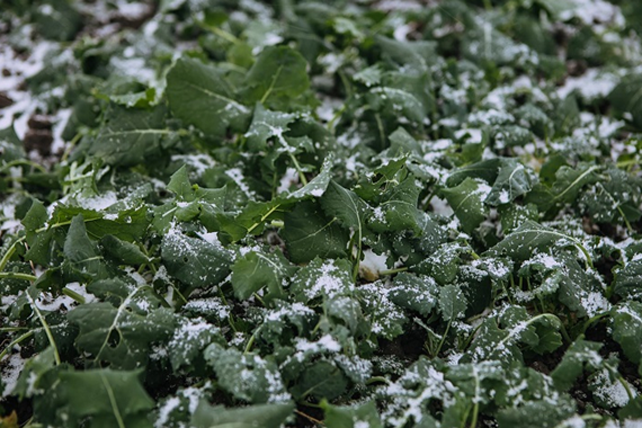
Not caring that, before the onset of frosts and frosts (in the region, frost ranged from -1 to -7 degrees Celsius) on most of the edges of the field were covered with snow, without winter crops to be in trouble. The increasingly warm weather during the fall of leaves has had a significant impact on the hardening of vegetation in most regions of the country. Single frosts did not allow the plants to optimally go into a state of calm due to the thickening of cell juice in the tissues and structural changes that lower their freezing point.
The process of hardening winter crops takes place in several stages. For full-fledged growth, the plant must undergo a pre-harvesting period (temperature below 15°C in sunny weather or below 10°C in cloudy weather), after which 3-4 degrees in the temperature range are required ID +2°C to +5 °C. Roslins will begin to harden after a period of stable sub-zero temperatures. Next, everything is stored in the form of plants, the stage of their hardening, life with macro-microelements (for grain crops, especially important: Mn, Cu, Zn, and for ripaku: B, Mn and Mo).
Do not forget that the frost resistance of roses depends not only on the level to which the temperature drops, but also on other factors, such as:
- first of all, as already known, the development of the growths and the level of their survival before winter – not only with the main elements (NPK, Mg or S), but with microelements that increase the resistance of the growths to frost and insensitivity their minds have overwintered;
- the end of the frosty period and the stage of plant hardening,
- the snow globe, the strength of the wind,
- sensitivity to variety,
- viscousness.,