
Ensuring successful wintering of winter crops
Despite a slight drop in temperature and short-term rains in some regions of the country, the beginning of October of the country, early October was relatively warm compared to the annual average.
Average daily temperatures in some regions of the country reached 15-18°C. In the 10th of October, there was a significant cold snap, with morning temperatures reaching sub-zero.
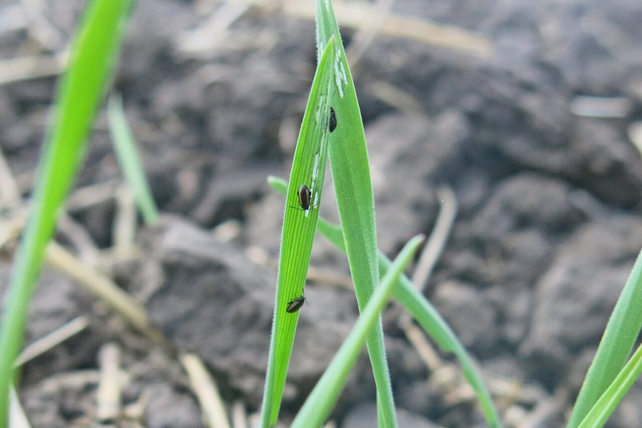
Despite the drop in temperature, the period of warm September and early October affected pest activity. The first aphid attacks can already be observed on barley, which in many regions of the country is in the BBCH 11-12 phase. Other pests are also appearing, such as polyphagous pests, cereal flies, bread beetle, and cicadas. In addition to pests, barley seedlings are showing the first signs of net spotting, which means that in addition to pest monitoring, it is also necessary to monitor the development of fungal infections and, if necessary, to carry out protective treatments.
Warm weather contributed to the development of rapeseed crops, which is in the 6-8 leaf stage (BBCH 16-18). The drop in temperature in recent days will slow down this process. Unfortunately, there is still significant pest activity. These include: cabbage moth, rapeseed sawfly, whiteflies, gnawing scoops, cabbage stem borer, fleas, bedbugs, leafhoppers, and cabbage aphids. Therefore, it is necessary to monitor rapeseed crops and, if the threshold of harmfulness is exceeded, to treat them with insecticides.
To increase plant resistance to low temperatures, stressful conditions and pathogens, it is recommended to add trace elements to pesticide applications for both winter cereals and rapeseed. For cereals, the most important are zinc, copper, manganese, molybdenum and iron, while for rapeseed, boron, manganese, molybdenum and copper play an important role. A universal solution for winter cereals and rapeseed from Agrarian Chemical Company LLC is ADOB Basfoliar 12-4-6+S fertilizer, which contains nitrogen (N), sulfur (S) and a complex of trace elements: boron (B), manganese (Mn), copper (Cu), zinc (Zn), iron (Fe) and molybdenum (Mo).
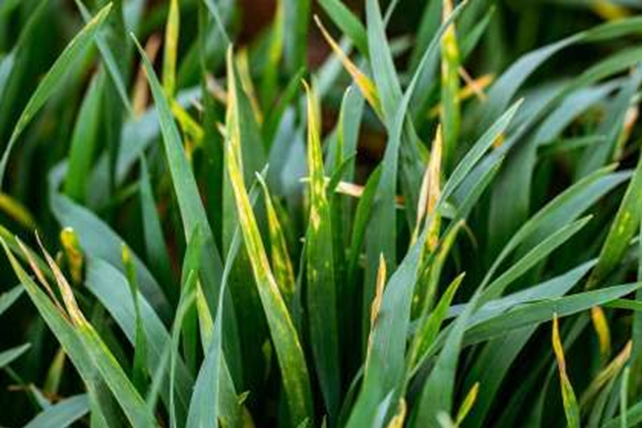
In addition, our company offers ADOB Cereals Macro+Micro, a complex fertilizer adapted to the needs of cereals, which contains nitrogen (N), potassium (K), sulfur (S) and trace elements that are especially important for the proper development, high yield and frost resistance of crops, namely zinc (Zn), copper (Cu), manganese (Mn), molybdenum (Mo) and iron (Fe).
